
Trichoscopy

hair analyzing

Precision, Prediction, and Peace of Mind: Your Hair Transplant Journey with the 3D Transplanner

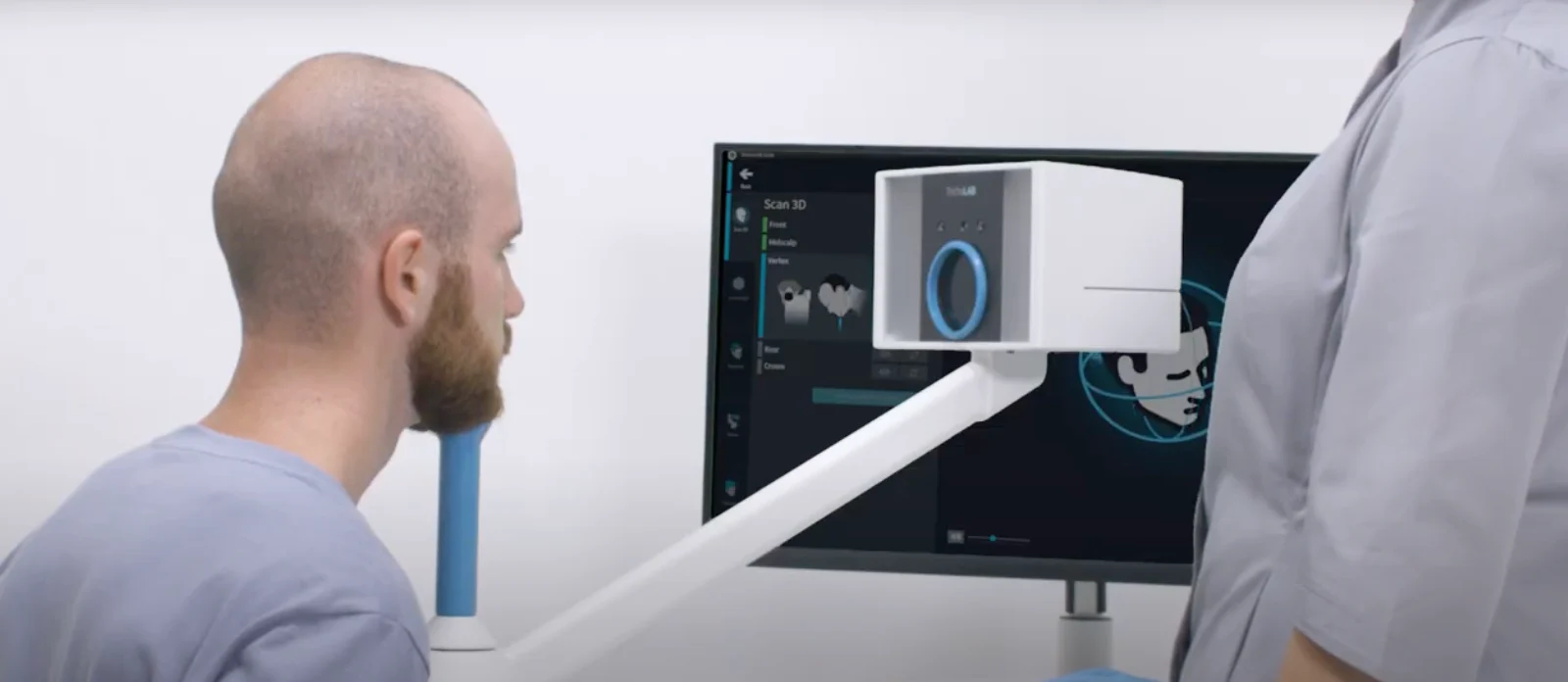
At Sule Hair Clinic, we believe the decision to undergo hair restoration should be met with confidence and clarity. That is why we utilize the TrichoLAB 3D Transplanner, a pioneering solution committed to setting new standards in hair diagnostics and planning, rather than simply following them. We are committed to using the most modern and advanced technology to meet our clients' expectations. The 3D Transplanner is a specialized three-dimensional planning system used specifically in hair transplantation. Its core purpose is to deliver measurable results and gain patient confidence. By creating a full 3D model of your scalp, the 3D Transplanner allows our doctor to plan the entire procedure with very high precision before the surgery even begins. It analyzes your head shape, angles, and hairless areas in 3D. The result? Your hair transplant becomes more predictable, more natural, and fully personalized. Instead of relying on guesswork, your doctor works with a detailed 3D roadmap, leading to a better and more natural final result.

What is Trichoscopy?

Tricho LAB 3D transplanner

Trichoscopy is a non-invasive diagnostic technique used to examine the hair and scalp using a dermatoscope, which is a specialized handheld microscope with a polarized light source. This technique allows dermatologists to examine hair shafts, follicular openings, and the scalp in detail, providing a more accurate diagnosis of hair and scalp conditions.

Trichoscopy can be used to diagnose various hair and scalp disorders, such as androgenetic alopecia, alopecia areata, telogen effluvium, and scalp psoriasis. It can also be used to assess the progress of hair regrowth after treatment.

During a trichoscopy exam, the dermatologist will apply a gel or oil to the scalp to improve the visibility of the hair and scalp structures. The dermatoscope is then placed on the scalp, and the images are examined on a computer monitor. The dermatologist may also take photographs for documentation and to monitor progress.

Overall, trichoscopy is a valuable tool for dermatologists to diagnose and monitor hair and scalp conditions, and it can provide more accurate and detailed information than traditional methods of examination.

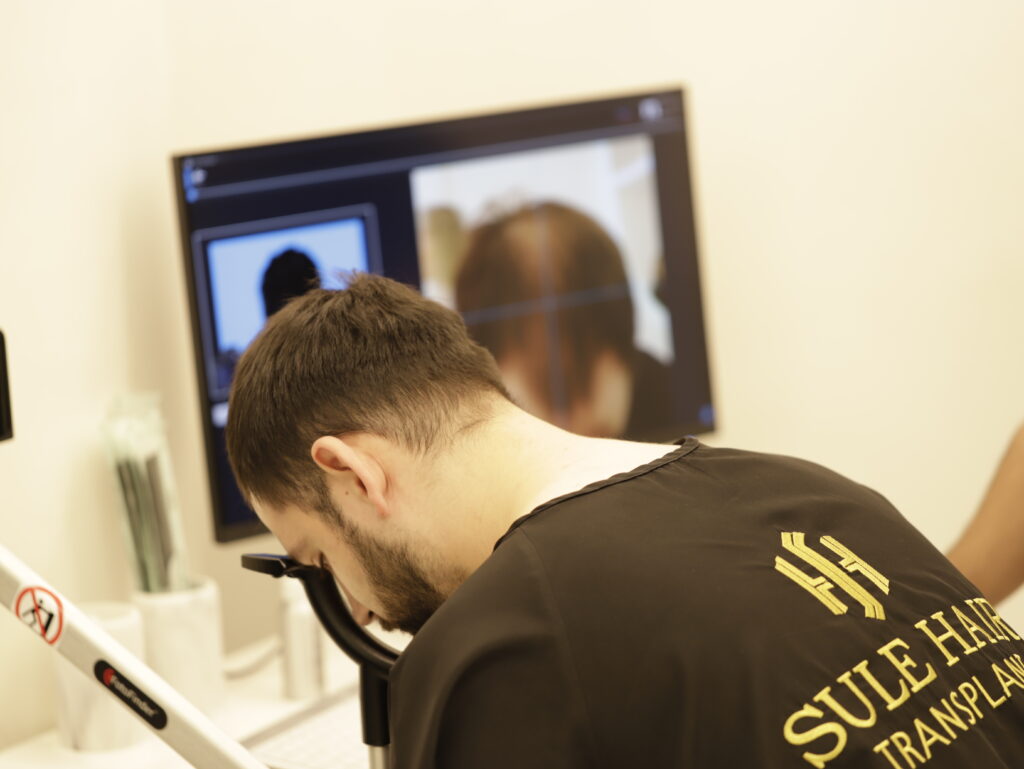
Trichoscopy device being used in a hair transplant procedure at Sule Hair Transplant Clinic, Turkey.

Advantages of Trichoscopy

Trichoscopy has several advantages over other diagnostic methods for hair and scalp conditions:

  1. Non-invasive: Trichoscopy is a non-invasive technique, which means it does not require any incisions or punctures of the skin. This makes it a safer and less painful option for patients.

  2. Accurate diagnosis: Trichoscopy allows for detailed visualization of the hair shaft, hair follicles, and scalp skin, which can aid in the accurate diagnosis of hair and scalp conditions. It also helps in identifying early signs of hair loss, which can lead to earlier intervention and better treatment outcomes.

  3. Objective assessment: Trichoscopy provides an objective assessment of the hair and scalp, which means that it eliminates subjectivity in the diagnosis and monitoring of hair conditions. It also helps to track treatment progress over time.

  4. Cost-effective: Trichoscopy is a cost-effective diagnostic tool, especially when compared to more invasive procedures such as scalp biopsies.

  5. Patient-friendly: Trichoscopy is a quick and painless procedure that can be performed in a clinic or doctor’s office. It also does not require any special preparation or recovery time, making it convenient for patients.

Overall, trichoscopy is a valuable tool in the diagnosis and management of hair and scalp conditions, providing accurate and objective information to healthcare providers while being a safe and patient-friendly option.

Discover Regenerative Hair Solutions!

Revolutionary therapies for natural hair growth and restoration.

Experience the future of hair restoration with our advanced regenerative treatments. Scientifically proven, minimally invasive, and highly effective